capture your grief, day 14: beliefs and spirituality

An excerpt from my Spirituality and Counseling class benchmark paper:

The most dramatic shift I have experienced in my spirituality was after the death of my first born, Kade, four years ago. He was 19 and I was nearly 40. Like Moore’s (2011) “Jonah and the whale” analogy, my spiritual dark night was colossal in size, much bigger than I was. It affected every fiber of my being, every experience I had, and every thought in my head.

Explosion

My spiritual dark night was an explosion of planetary proportions. The fragments and pieces have yet to settle. Some have disintegrated completely. Some were charred to ugliness beyond recognition. Some have been blown to such heights that it is indeterminable if they will ever land. If I trust, as the ash rains down and coats me grey, that a transformation is taking place, I can bear the fallout easier.

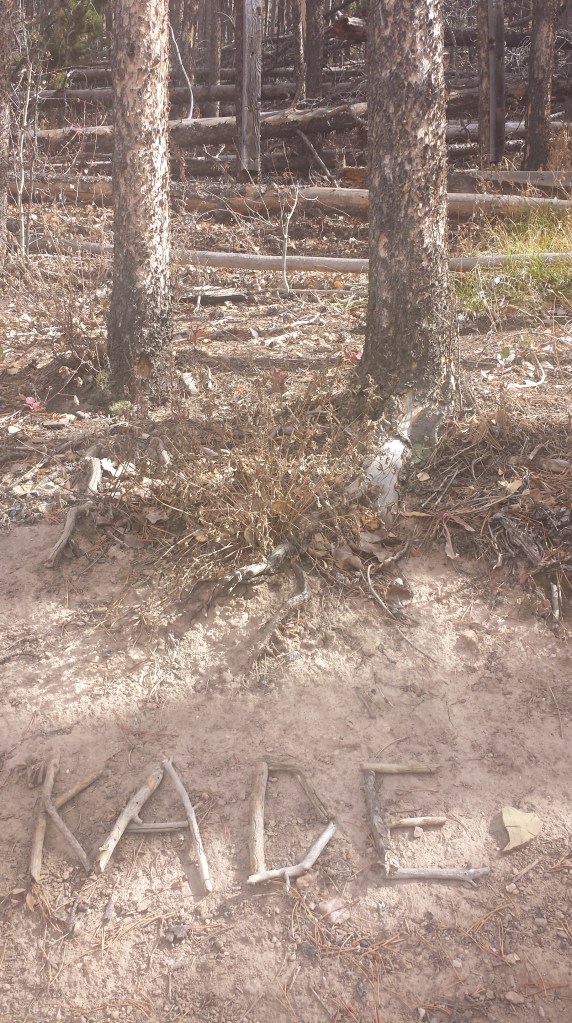
20161014_120412

Tenderfoot Trail, Dillon, CO, 10/14/16

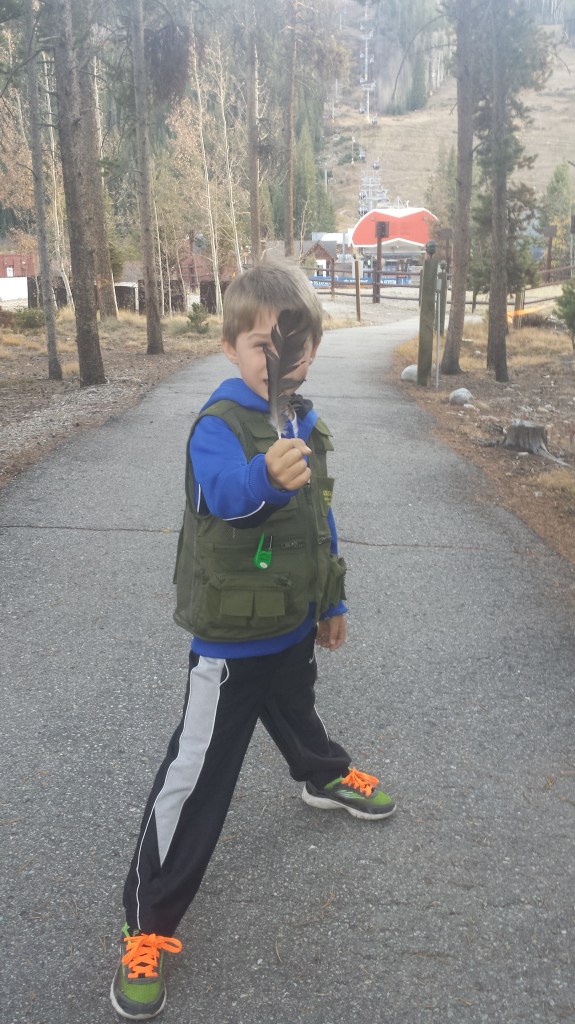
20161014_130507

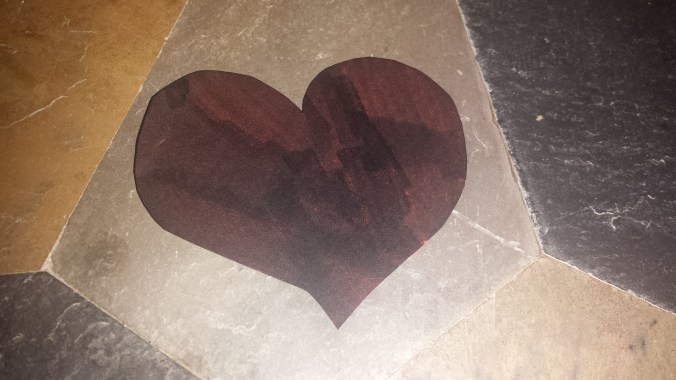
The best heart rock I’ve found yet

capture your grief, day 13: dear world

We are spending a couple days in the mountains on a mini-vacation. Aaahhh, day 1 has been so nice and relaxing. But at dinner, in the restaurant that we had all to ourselves because it’s the off-season, I realized something. The happier I am and the more joy in my heart—like on a mini-vacation in the mountains—the more I miss Kade.

I asked my math-inclined hubby, “What kind of equation is that?” He said it was a proportional equation.

y = kx where k is the constant.

Yes, k is the constant.

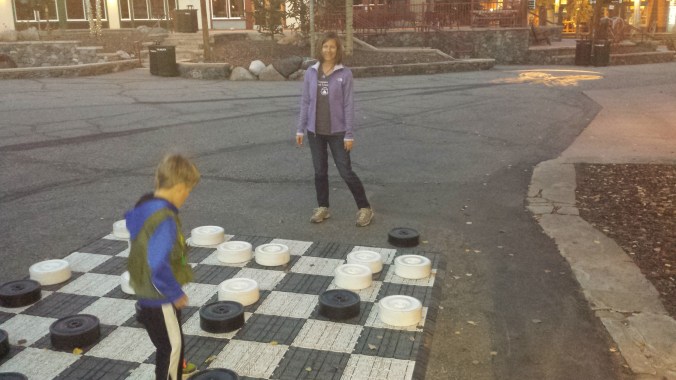
20161013_161545

An empty chair

20161013_180655

An evening walk

20161013_184119

20161013_182812

Sunset walk

20161013_182711

Peek-a-boo moon

20161013_180758

20161013_184418

capture your grief, day 9: surrender & embrace

Early on I learned the phrase, Lean in to your grief. I have a grief counselor who has imparted that the crazy feelings I come in with are OK and normal. I’ve gone to an incredible bereaved parent retreat with a focus on mindfulness and being with your grief.

Does it suck to surrender to the sadness? Is it hard to embrace the emotions? Of course. Is it easier to avoid, and not go there? Yes, and I often do. Well, when I get through the things I need to get through in a day, like being around other people, going to my part-time job, or going to class, I am likely actively avoiding going there. Sometimes I’ve put off journaling for months. It’s been so hard to physically open it up, get my Kleenex, and know the pain that will ensue. But it’s cleansing. It’s…surrendering.

This may sound strange, but at four years out, I schedule time for going there. When I go to Buena Vista for the anniversary, I carve out alone time to journal by his river. When we go on vacation (it’s especially hard because I wish he was with us), I set aside time to journal. When it’s been too long, I crave things like being with my grief friends, going to Kade’s stone, going to a grief retreat, and journaling.

I suppose I crave those things, as a mom craves being near her child.

This topic, Surrender & Embrace, reminds me of other powerful sentiments: You can’t get around it, you have to go through it and If you don’t deal with it, it deals with you.

20161009_183801

October 9, 2016, the Front Range at sunset

capture your grief, day 8: beautiful mysteries

In my counseling program we are taught to be OK with ambiguity, that it will be a part of our jobs. We won’t always know the whole backstory. We won’t always know the whys. We won’t always know how it turned out. In class often the answer to a question is, “It depends.” Often there are no black and white answers, even in our ethics class, where I thought for sure there would be black and white answers.

What would Kade be like today? He would be 23, to turn 24 in January (I froze a bit, thinking of what will transpire in the next 3 months: four major holidays and his birthday. Again, even though I don’t want them to be, those times of the year are so impacting. I want to throw up when I see decorations in a store. It’s crazy, but it’s true; for now, anyway.)

At 23-going-on-24, Kade’s prefrontal cortex will not have even completed its growth yet. That is the center for executive function: judgment, inhibitory control, and planning, among others. It will have matured at around age 26. But today, he will have been closer, closer to the days where impulsivity, thrill-seeking, and questionable judgment do not physiologically reign.

He was getting there. Moving away from the city to the mountains to be a whitewater rafting guide, he was getting there. Getting a second job at the behest of his parents, a night job that made him so tired, he was getting there. I learned he talked about going to CSU in the fall with one of his rafting guide friends who went there, to pursue zoology. He was getting there. If only he got there.

Today, in an alternate universe on Saturday, October 8th, 2016, Kade would be a little broader, a little heavier, and in this world of beard popularity, a little hairier. He would whitewater-raft guide in Buena Vista by summer, and perhaps student at community college, Colorado Mountain College, or Colorado State University by fall, winter, and spring.

I wish he would, but I don’t think he would come back home to live in the non-rafting months. He would live with roommates. I would visit him and bring him a coffee, and care packages. He would visit us, and be amused with Asher’s growing so fast. He would try to teach Asher bad words and I would try to keep him from doing it. Asher would adore his great big brother. Instead of Asher bringing Kade’s skateboard up to his room to keep, Kade would teach him to balance on it outside. Instead of Asher asking to strum unguided on guitars on their stands, Kade would teach him a few proper riffs on his bed. Our family pictures would have Kade’s whole, grown, handsome, real self in them instead of a blown-up picture of part of him that we hold.

Family portraits…how adorable would they be with Little Asher and Big Kade? Is it too much to ask that both of my children be in a fucking family portrait? Can you see why anger is a part of grief? Is that too much for a mother to ask? Who thought this was alright, anyway? Who’s in charge here and thought that anything close to this would be alright?

OK, you were just witness to what a griefburst looks like, digitally.

Bitter tears wiped. Worked on a different project for a while. Back to Beautiful Mysteries.

Our relationship wasn’t perfect but it was improving. Kade was growing, as was I. We had lots of family counseling, lots of techniques learned, and I am sure we would continue to learn and grow separately, as well as together. Maybe we would have coffee dates. Maybe he would share more than he did before. Maybe, at 23-going-on-24, things would be distant, shaky, rough, and precarious. Maybe after 26 would our adult relationship start to flourish. Oh God, if we had gotten to 26.

Looking at his friends and their capacity to be loving, deeply pondering, and supporting human beings, I have high hopes for Alternate Universe October 8th, 2016. At 12:54 p.m., instead of writing on a grief blog, I would be heading to the grocery store to get some things to barbeque, and extras to throw in a box for him to take with. Because my son is coming over for dinner.

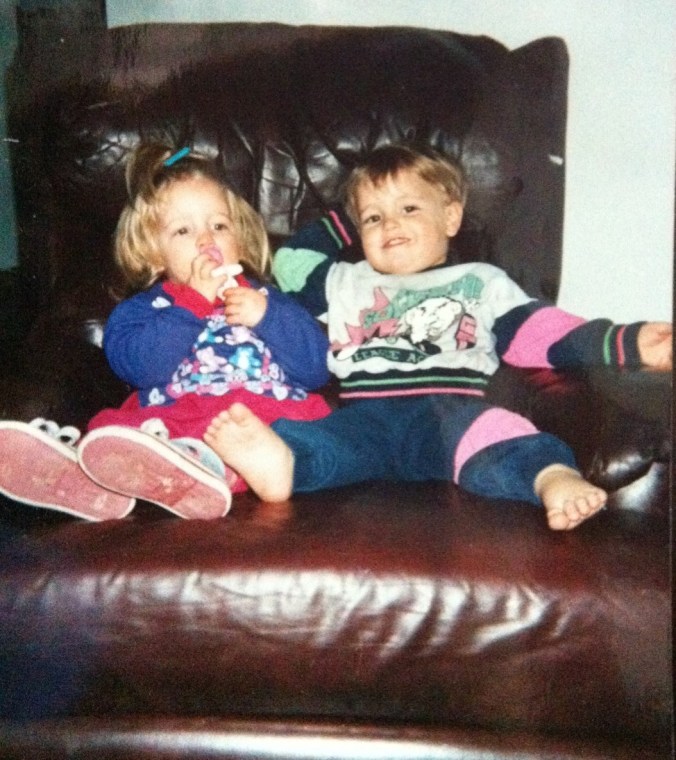
196638_1022895463850_7273_n

robbins-2_edited

SANTOS-51SANTOS-57

capture your grief, day 7: myths

The myth that comes to mind is the five stages of grief. Though I see this knowledge becoming more known and disseminated in grief circles, it does not seem to be widely known in popular culture:

Elizabeth Kubler-Ross formulated her five stages of grief for the dying, not for the grieving. Denial, anger, bargaining, depression, and acceptance were stages of a theory, that people who were terminally ill may experience. It’s not so much a myth, as a misapplication.

There. Got that out of the way.

I suppose another myth is that profound grief is finite. Before Kade died I might have thought that losing a child would be a horribly rough road, but that after a period of hell (like a year), one would “get over it” and life would go back to how it was. What I’ve learned is that grief doesn’t end. I have friends 5, 10, 20 years out. They are not negative people, nor are they “stuck.” But they still miss their kids. They still get angry. They still require support sometimes. They still cry. Not in the same manner as the terrible early months, but they are forever changed.

20161008_001750_lls

capture your grief – day 6: empathy

Even though I lost a child, I find myself still wondering what to do, and what to say to others going through hard times. I know I’ve been guilty of the “at leasts.” I know I’ve tried to fill space by trying to intellectualize, or make it better for someone. I need very frequent reminders like CarlyMarie’s below. What she has to say on empathy and holding space for a person is worth repeating.

Caring, empathetic people showed up for me right away…and continue to in surprising ways. After Kade died, my mom flew out the next day and stayed with me for a month. Aunts, uncles, and cousins flew to CO right away and helped while they were here. Friends flew out. My best friends came over and made untold behind the scenes arrangements. Tons of coworkers and friends came to the funeral. Lots of people reached out by e-mail or Facebook.

Some people are really good at empathy, and I look up to their example:

  • The old high school friend, who I hadn’t seen in 10 or 20 years, who came over to help with thank you cards.
  • My best friend who commiserates with me on how bad this sucks, unpolished and un-shined-up, not trying to shed a positive light. Oh yeah, she drove through a scary mountain blizzard with me for something Kade-related.
  • My friend who stole away from her large family to vacation with me over a holiday weekend. Shortly after Kade’s death we reminisced, questioned, conversed, picked out boys that looked like him in the crowd, chose girlfriends for him from the crowd, and bought keepsakes we wished we could have given to him.
  • My mom who keeps Kade’s memory alive with me.
  • The preschool mom friend who wanted to hear more about Asher’s great big brother when we went running together.
  • The kindergarten moms who saw my face at a classmate of Asher’s birthday party and knew something was wrong. It was the day before Kade’s birthday, and I had just come from volunteering for Kade. They wanted to see pictures from volunteering, and pictures of Kade.
  • Kade’s and my friends showing up to my sometimes frequent, sometimes harebrained gatherings for Kade.
  • The classmate in my graduate program who greeted me in class with a silent hug. She had read a Facebook post I made shortly before on how I couldn’t stop the tears in a restaurant as I read for class.

And then there are thoughtful acts that might not exactly fit into CarlyMarie’s description of empathy:

  • The mother and son ornament and book left on my front porch on a significant date.
  • A peacock keychain received in the mail (read this blog post to learn the peacock reference).
  • Pictures of baby, toddler, and preschooler Kade texted from an old friend when she randomly comes across them. She also texts me grief books she’s read, for me to read or to stay away from.
  • img_9697

Of course my list is not comprehensive and there are too many examples of thoughtfulness and empathy for me to mention. I hope to learn from and emulate the empathy I’ve witnessed, and I hope to remember this, in my life:

From CarlyMarie:

Capture Your Grief Day 6: EMPATHY

Empathy is about holding space for a person who is hurting. It is about allowing them to fall apart in your presence without judging them. It is about just simply showing up and being there without trying to fix them or show them a silver lining. When a baby or child has died, there is no “At least”. There is no “God needed another angel”. There is no “You should be thankful.” But! There is “I am here for you”. There is “Cry as much as you need to”. There is “Take as long as you like”.

Loved ones often say the wrong things because they are desperately attempting to make you feel better. They hate seeing you so hurt. Their intentions are usually always from the heart. They feel they have to try and fix things. Only there is no fixing any of this. It is what it is and nothing can make any of this right. Other times people say the wrong things because they just have no idea what to say.

Some people find showing empathy difficult because they hate awkward silences. But here is the thing… You can get over your fear of awkwardness by wrapping your arms around your friend! Sit and be with them in silence, even if it is difficult. If you can sit with your friend while they cry their heart out you are a true gift to them. Allowing your friend to release their emotions in your presence is an honour. Embrace that moment. Be proud of yourself for stepping out of your comfort zone. And if you don’t know what to say – tell your friend that. Remind them that you are there to listen.
Being empathetic in my opinion is much easier than trying to fix the impossible. It all comes down to acceptance. Accepting that sometimes in life, really horrible things happen and often to really good people and no silver lining will help right now.
Sending out all my love to anyone who has been on the receiving end of a hurtful comment while grieving, to anyone who struggles with showing empathy (breathe, you can do this!) and to everyone who is really good at it 🙂

capture your grief – day 5: the unspoken

Day 5 is a hard one. Here is CarlyMarie’s description:

Normalizing grief is so important and that I why today I am calling upon those who feel brave enough to speak about the nitty gritty side of grief. Share something about your grief journey that you might feel is strange or not common. It might be something you do to remember your children by or maybe it is something you fear about the future. Often while grieving we have feelings of isolation because we fear judgement that what we are feeling isn’t normal. But it is amazing to see just how many people feel the same way. When others stand up and express how they feel through sharing their experiences, it allows us to say “Hey, I feel that way too!” and the fear of feeling like we are crazy is lifted and in some cases embraced!

There is a lot of nitty gritty of grief. It’s all nitty gritty. That will be a good topic to write on when I have more time to delve into it.

For now, here’s a time that comes to mind when I remember thinking, OK, this might be a bit crazy. It was raining late at night, and I was looking at my phone when I should have been trying to sleep. On the radar map of my weather app, I was “cruising around” the Denver Metro area looking at where it was raining. Then I wondered if it was raining on Kade.

I guided the map to the west, and found the windy road that goes to the top of Mt. Lindo. I made it to the top, and found myself with an eagle’s eye view of the mausoleum up there, the parking lot, and the enormous pine tree above his stone. And the scattering garden where we spread some of his ashes.

There are plenty of times when I feel that my actions could be viewed as crazy—not so much to other bereaved parents, but maybe to others. When I do things like visit Kade’s stone on a rainy night via an app on my phone, or say, “Good morning! I love you, Baby!” to a hawk coasting on an air current, I sort of feel crazy…but sort of feel like it’s the most normal thing in the world.

Perhaps leaning a teeny bit toward crazy is taking a screen shot of the top of Mt. Lindo from my weather app, drawing a red arrow to where Kade’s stone is, and posting it here for you to see.

2016-10-0600-18-44

capture your grief – day 4: support circles

I can’t say enough about the healing power of a group. The Compassionate Friends chapter meetings that I attend have been a help. (The Compassionate Friends is a nation-wide support for child, grandchild, and sibling loss). It’s good to hear what other people have done in certain situations, and I’ve met friends I can connect with outside of the group.

tcf-logo

Early on, I read a book called The Grief Club: The Secret to Getting through All Kinds of Change by Melody Beattie. She lost a son, and has had numerous other losses in her life. It emphasized that you are not alone in what you are going through, even though it might feel isolating. Find those others. There are others. They can offer you the support that no one else can.

A former coworker led me to a smaller group: for moms whose kids died in young adulthood, called Hope for Hurting Moms. It’s always worth the hour drive to let my hair down and be with the smaller group of mamas who get it.

I read another book called Saturday Night Widows: The Adventures of Six Friends Remaking Their Lives. It revealed research that showed that novel and adventurous experiences, which form new neural pathways in the brain, are healing for trauma and grief. This inspired me to start my own little group of bereaved mom friends that I call The Healing Moms. We get out (sometimes a feat in itself) and try new things. Sometimes our new thing is a restaurant we want to check out; this month it’s a hike in Boulder.

2016-04-3014-59-23b

The Healing Moms participating in CarlyMarie’s The Mother Hearts “I See You” Project 2016

capture your grief – day 3: what it felt like

At first I thought, How on earth could I relay what it felt like. I thought of words I could use, like horror, pain, and blackness. Severed, distraught, vile, and crippling. Cruel.

Then I remembered something a bereaved mom friend relayed at one of our Compassionate Friends meetings. She told us how she described to a non-bereaved-parent friend of hers what it felt like to lose a child:

She asked her friend,

Do you remember when 9/11 happened? Right after, you couldn’t stop thinking about it…there were no planes flying in the sky…it was surreal…everything was off. That’s sort of the feeling of how life is after your child dies. Like right after 9/11, of everything off, all the time.

20161003_235134


capture your grief – day 2: who they are

I don’t think it was too long after his death that I asked friends on Facebook to give me one word to describe Kade so that I could make a Kade word cloud. Here it is:

1040225_10201249663434835_1546132293_o

Adventurous is the word that comes to my mind lately. When his friends climb fourteeners in his name I think, THAT is a tribute Kade would dig. He loved the outdoors. Being in the mountains, camping, fishing, skiing, kayaking, whitewater rafting, skateboarding. Didn’t like the city. Didn’t like the heat. Liked mountains, and winter, and cold.

Adventurous.

Today we went to the Cheyenne Mountain Zoo. Going with my youngest son is certainly sweet. Going without my oldest, is bitter. At the darling wallaby exhibit area, watching young zoo staffers walk past, my dad said, “Kade would have loved working at a place like this.”

Oh.

Daring to imagine my would-be-23-year-old going to work at the Cheyenne Mountain Zoo put a lump in my throat and a pain in my chest. He’d look so cute in a uniform. I pictured his excitement telling me about his duties and the animals. I dared to think for a moment of the bright future of an animal enthusiast. The whole day at the zoo had ebbed and flowed with happiness and grief, anyway, as so many things do now.

Oh.

Kade Tyson Riefenberg
So much more than his dates
1/24/93 – 6/29/12
Whitewater rafting guide, fisherman, naturalist, skateboarder, bass guitarist, avid reader, best friend to many, son, big brother, grandson, great-grandson, nephew, cousin.

923413_10202180432806760_1844617045_n